17″ supermoto wheels on a Sur-Ron or 79Bike Falcon — what actually changes on tarmac
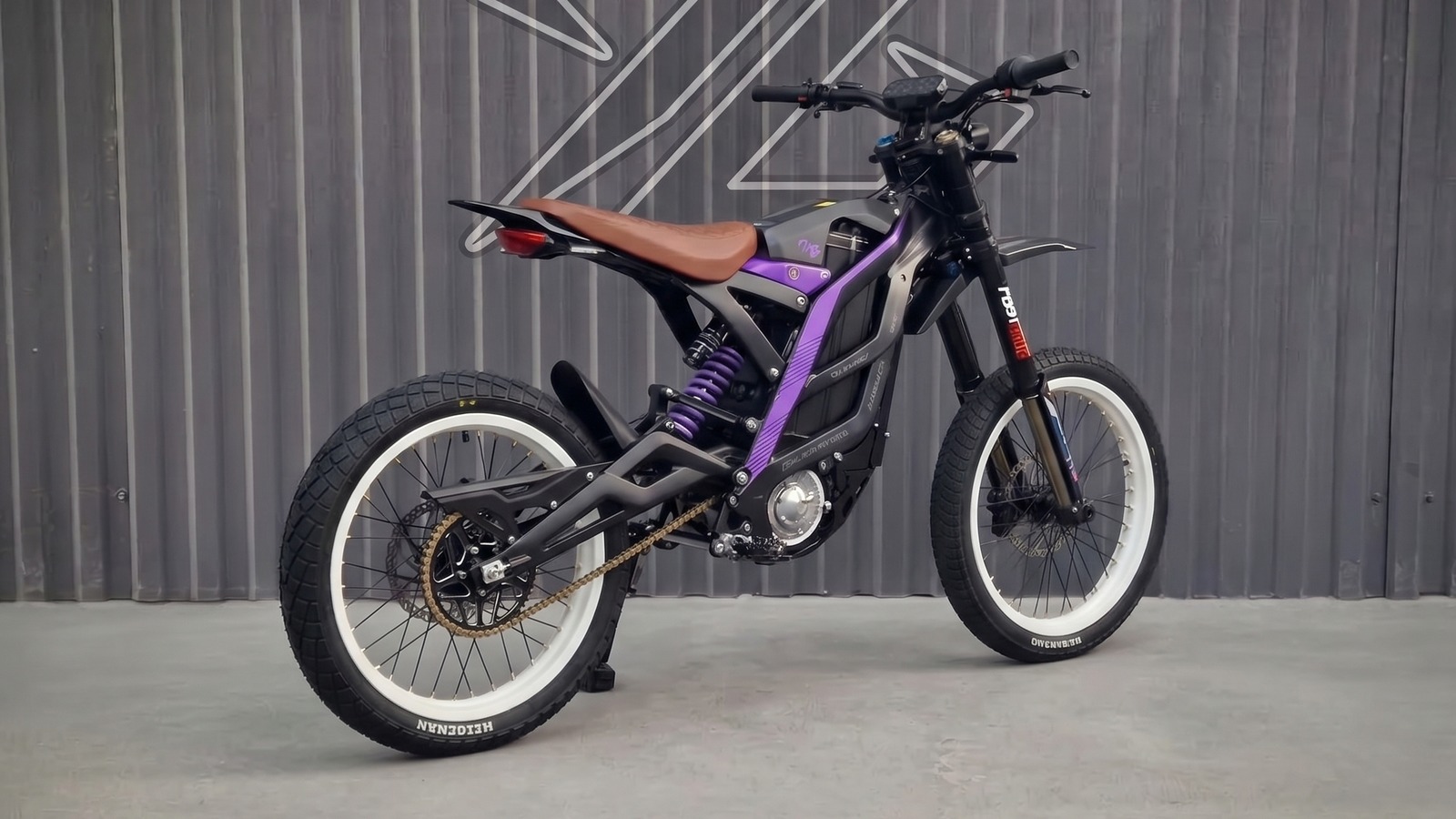
What happens when you drop from 19/19 to 17″
As delivered, the 79Bike Falcon PRO runs 19-inch wheels on off-road rubber — 70/100-19 front and rear. The Sur-Ron Light Bee and Talaria Sting are set up much the same way. That is a wheel built for rough ground: the bigger diameter rolls over obstacles more easily and the knobs bite into loose surfaces.
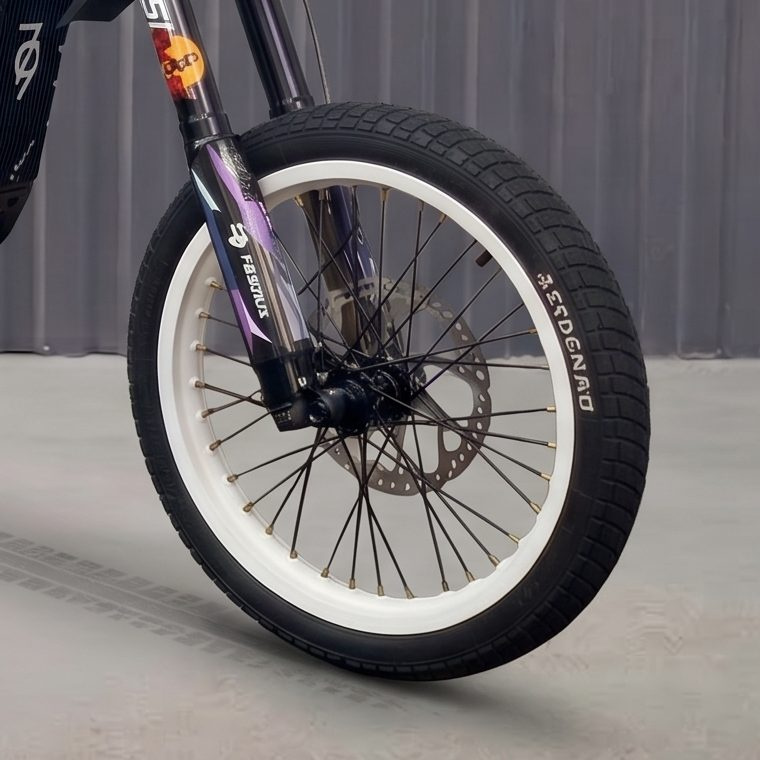
On tarmac those same qualities work against you. Knobs make little contact with a smooth surface, a tall tyre builds flex in the sidewall, and a large wheel is slow to fall into a corner. A 17″ supermoto wheel on a road tyre flips that around: lower, stiffer and with far more contact where you actually ride.
Three things change the moment you swap: ride height, how fast the bike answers the bars, and how it behaves under braking. The bike sits lower, so your feet reach the ground more easily. A shorter wheel radius means the same input at the bars turns the bike faster. And a road tyre puts down braking force where a knobby was already starting to slide.
Dirt versus tarmac — what to expect
| 19/19 wheels (stock) | Supermoto 17″ | |
|---|---|---|
| Handling on tarmac | Lazy, sidewall flexes | Fast response, big contact patch |
| Sand, roots, mud | Their natural habitat | Clearly worse |
| Ride height | Higher | Lower — more confident in town |
| Braking on dry tarmac | Tyre is the limit | Brake system is the limit |
| Tyre wear in road use | Fast, knobs tear | Slower — road compound |
| Character | Enduro | Supermoto |
That last row matters most in practice. After the swap this is not the same machine on different wheels — it is a bike that rides in a completely different way. Better to know that before you buy, not after.
What the wheels alone will not fix
Once the tyre stops being the bottleneck, the brake becomes one. On a 19-inch knobby you lock the front before you run out of brake. On road rubber it is the other way round: the tyre holds, and the caliper and disc start to run short.
The second thing is gearing. A smaller wheel shortens the effective final drive — the bike pulls harder off the line but gives up top end. A sprocket is the cheapest way to set that up for the way you ride.
The third is the most mundane: the kickstand. The bike sits lower, so the stock stand holds it at the wrong angle.
- Front brake — a bigger disc and pads that keep working when hot, not just on the first descent.
- Gearing — a smaller rear sprocket buys back top speed, a larger one buys acceleration.
- Kickstand — adjustable, so the bike stands at the right angle.
Two routes: convert your bike or buy one ready-built
If you already own a Sur-Ron LBX / L1e, Talaria Sting MX3/MX4, E-Ride Pro SS 2.0 or 79Bike Falcon PRO, you buy the wheelset on its own and fit it to your machine. It is the cheapest way into a supermoto setup, and you can always go back to off-road wheels when the weekend plan involves trees.
96 Power Parts custom wheelsets are built as race equipment, in the colours you specify — rims, spokes and hubs. The full specification and conditions are on the wheelset page.
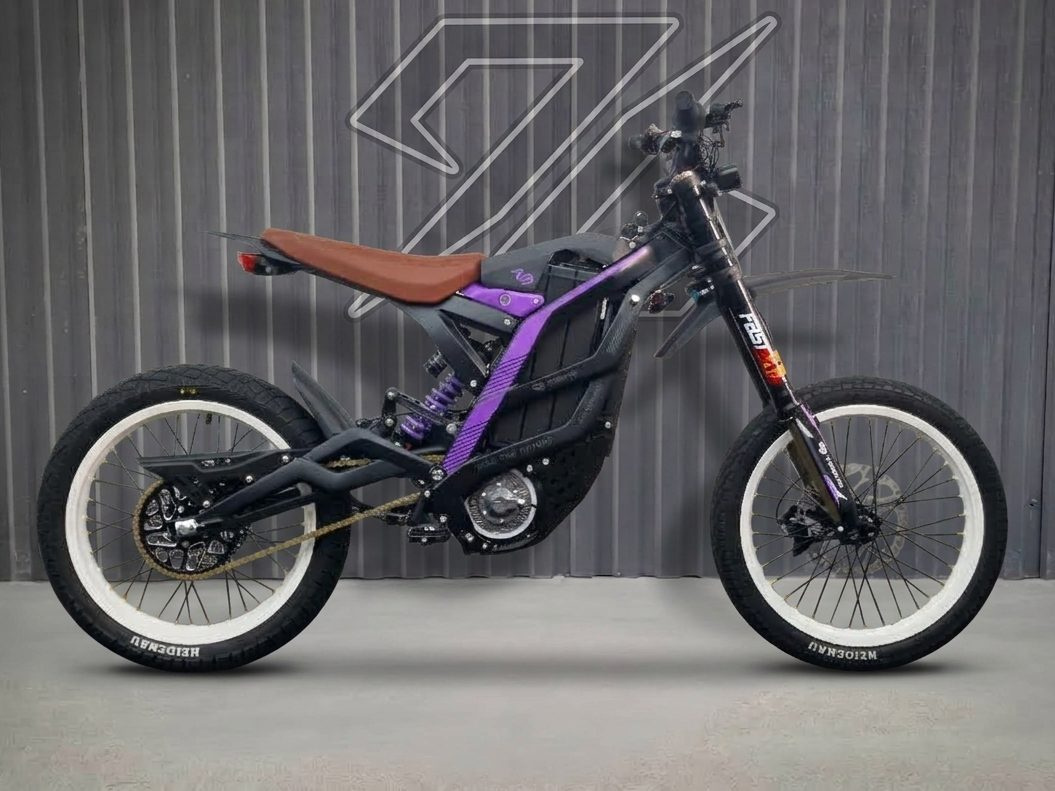
The other route is a ready-built machine. The 79BIKE Falcon PRO L1e in SUPERMOTO trim leaves our workshop assembled, configured and tested: 17″ wheels, wide 96 footpegs and the rear light relocation are already in the price. Nothing to fit — you collect a finished motorcycle with L1e homologation.
What is in the Falcon PRO L1e SUPERMOTO
The base is strong on its own: a Fastace ALX13RC 2.0 fork with 200 mm of travel and adjustable damping, and an LG M50LT 72 V 35 Ah battery you pull out in ten seconds and charge indoors instead of dragging the bike to a socket. Per the manufacturer spec sheet the machine does 85 km/h at 5 kW rated power.
On top of that comes the 96 Power Parts package, which changes the character of the bike:
- 17″ supermoto wheels instead of the stock 19/19 — lower and more confident on tarmac.
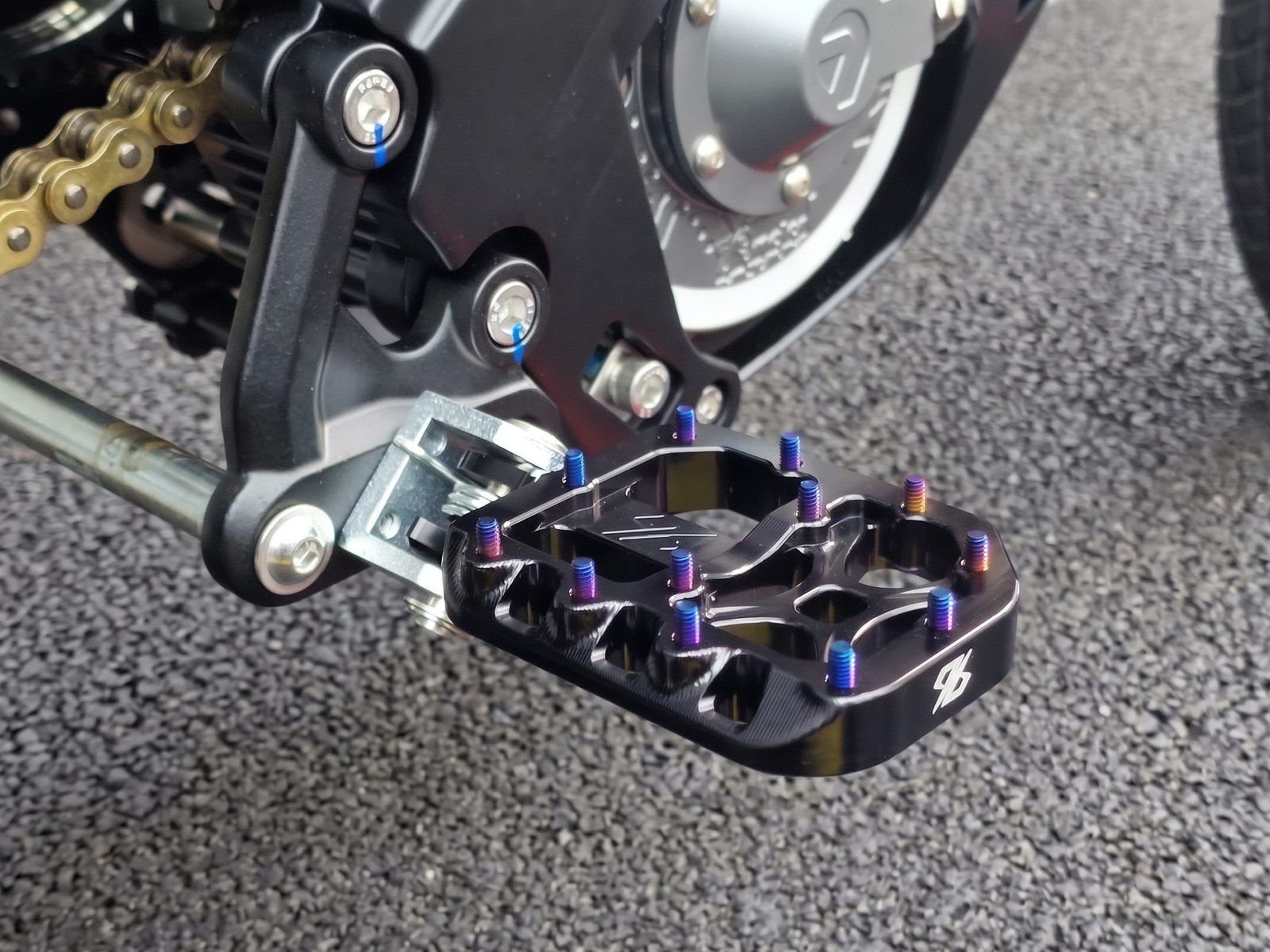
- Wide 96 footpegs — CNC aluminium, a bigger platform under your boot.
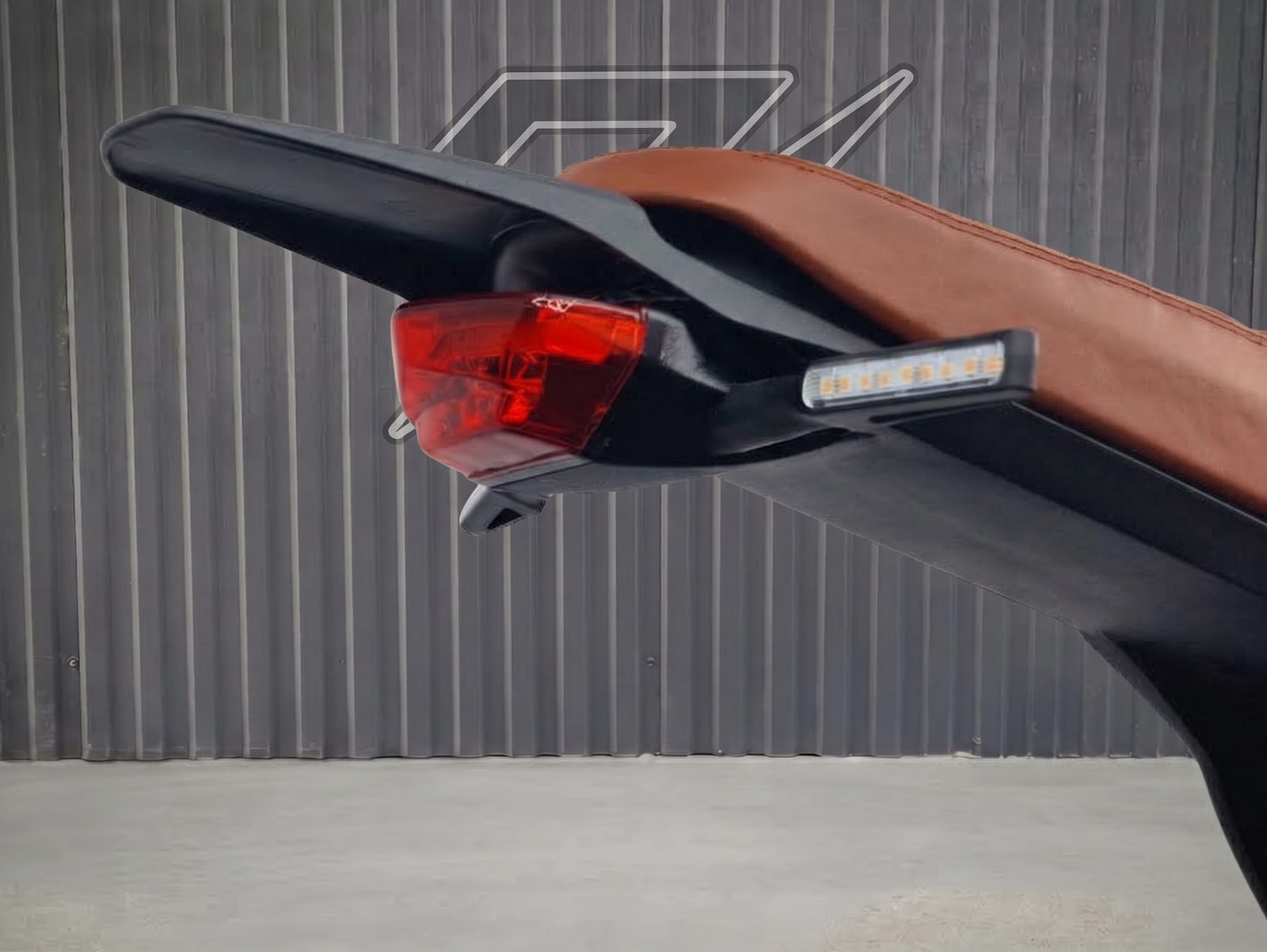
- Rear light relocation — light and indicators under the seat, no stock bracket.
- Assembly, setup and testing at our workshop — you collect a bike that is ready to ride.
Frequently asked questions
You might also like
- Chain and sprocket, 54T vs 60T — choosing your gearing
- Ceramic brake pads — when to replace them
- Belt or chain on a Sur-Ron Light Bee
- Direct mount clamp and reinforced triple tree
- Play in the headstock — why it comes back after every re-torque
+48 884 004 114 · contact@96powerparts.com