
Belt vs chain on a Sur-Ron Light Bee — which drive should you actually run in 2026?
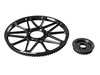
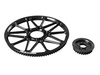
The "belt or chain" argument usually falls apart after two sentences, because both sides are talking about different parts. Here is the fact: a Light Bee leaves the factory with both drives at once — a toothed belt between motor and jackshaft, and a 420 chain between jackshaft and rear wheel. So the real question is not "belt or chain", it is: is it worth swapping the final-drive chain for a belt.
No fluff below: what each option actually gives you, what it costs, and when the conversion does not pay off.
First, separate the two drives — this is where most arguments die
- Primary drive: motor → jackshaft, toothed belt. That is where the Gates reinforced primary drive belt lives.
- Final drive: jackshaft → rear wheel, 420 chain and sprocket.
The most common buying mistake: someone orders the reinforced Gates belt thinking they are "going belt drive". They are not — that is the primary belt, a completely different part that has nothing to do with a final-drive conversion.
What the chain actually costs you
- Lubing and cleaning after every muddy ride — skip it and the chain stretches faster.
- Stretch → re-tension → wear on both rear and front sprocket.
- Mud and grit packing between the links, lube slung across the swingarm and frame.
- Noise under load and chain slap over rough ground.
But the chain's advantages are real: cheap to replace, available everywhere, lets you re-gear in fifteen minutes, and can be fixed on the trail with a split link.
What a belt conversion changes
Straight from the 96 Power Parts chain-to-belt conversion kit listing — no invented numbers:
- No lubing — nothing to clean, nothing to oil.
- Clearly quieter under load.
- Stock Light Bee gearing kept — the character of the bike does not change.
- +4 mm extra tyre clearance.
Two things you need to know before you strip the drive: the HTD-8M-1440-12 belt is not included (you buy it separately) and the original swingarm requires modification — the parts for it are in the kit, but the work itself is a workshop job with a mill, not a hand file.
Belt vs chain — the honest comparison
- Maintenance: belt — no lubing; chain — regular lube and tension checks.
- Noise: belt quieter; chain louder under load.
- Re-gearing: chain — easy and cheap; belt — you stay on stock gearing.
- Trailside repair: chain — split link and ride home; belt — you call for a trailer.
- Install: chain — bolt-on; belt — swingarm modification.
- Entry cost: chain low; belt 217.50 EUR for the kit + belt bought separately + labour.
Stay on the chain if…
- You change gearing often to suit the terrain.
- You ride mud and rocks where an on-the-spot fix matters.
- You want the lowest cost per season.
Just build it properly, because cheap components eat each other: D.I.D 420NZ3G-B chain (44.00 EUR), aluminium 96 sprocket, black, 54T (85.50 EUR) and an aluminium chain guard (32.50 EUR). Always replace chain and sprocket as a pair — a new chain on a worn sprocket will stretch within a few rides.
Go belt if…
- You ride where noise is a problem — residential areas, private land, shared trails.
- Weekly maintenance annoys you more than a one-off install bill.
- You run stock gearing anyway.
- The drive is already apart, or you run an aftermarket swingarm.
Cost and time, no hand-waving
- Chain path: about 162 EUR for chain + sprocket + guard, roughly an hour to fit.
- Belt path: 217.50 EUR for the kit + an HTD-8M-1440-12 belt bought separately + swingarm machining at a workshop.
While the drive is apart anyway, check the primary belt and the jackshaft bearings. You will not enjoy going back in there a second time.
What we would do
For most Light Bee owners, a properly built chain wins — lower cost, flexible gearing, trailside repair. The belt conversion is a deliberate choice for silence and zero maintenance: it pays off when you were staying on stock gearing anyway and have access to a workshop.
The conversion kit is sometimes temporarily out of stock — ask us for an ETA before you plan the strip-down.
96 Power Parts — our own CNC production in the EU, parts tested on our own bikes, shipping from Wrocław, customer rating 4.8/5. Fitment or availability questions — get in touch.