203mm vs 220mm vs 250mm: Why Upgrade to Larger Brake Rotors on Sur-Ron, E-Ride Pro & 79Bike?
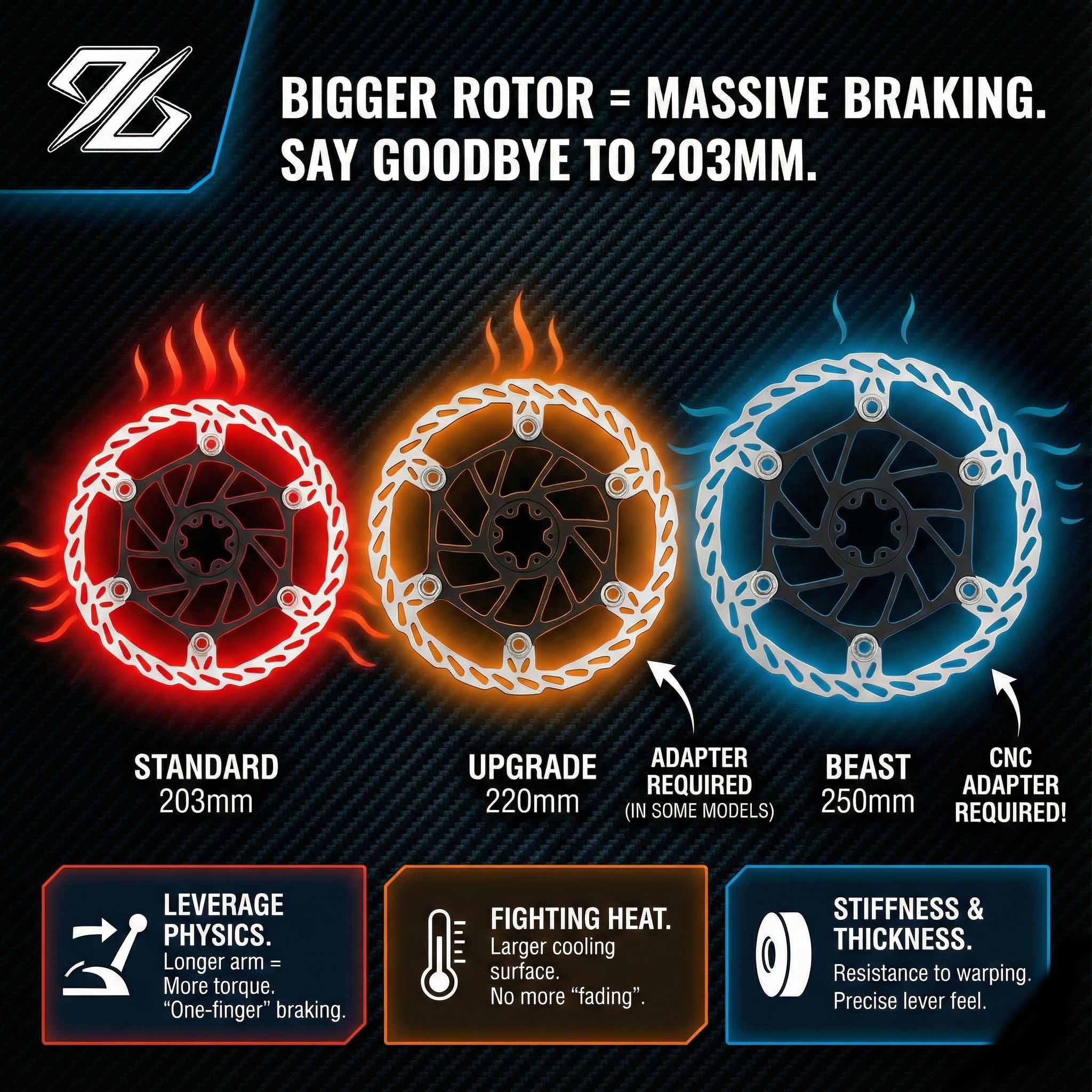
The disc your light electric bike left the factory with is usually a bicycle part doing a motorcycle job. A Sur-Ron, Talaria or E-Ride Pro with a rider on board weighs over 120 kg and runs to 80 km/h, yet it stops on a rotor sized for a downhill bicycle. This guide answers one question: which disc actually makes sense for your bike, and what else you need to buy to fit it.
Why a bigger disc stops harder
It is simple leverage. Grab a spinning wheel close to the axle and you need a lot of force; grab it at the outer edge and it stops easily. Going from 203 mm to 220 mm gives you roughly 8% more leverage, and from 203 mm to 250 mm close to 25%. In practice that means one-finger braking instead of squeezing the lever with your whole hand, better modulation, and far less arm pump on long descents.
Heat matters more than raw power
Braking energy turns into heat, and the disc has to absorb it and shed it. A small rotor has little thermal capacity — it heats up fast, and past a critical temperature you get brake fade: the lever goes soft, the bite point moves, stopping power drops. A larger diameter means more material and more surface area. A floating design (aluminium carrier plus a steel braking ring on rivets) goes further: the steel can expand without loading the centre of the disc, so the rotor stays flat when it is hot.
Thickness: 1.9 mm vs 2.3 mm
Sur-Ron factory rotors are 1.9 mm thick. Under hard braking and rock strikes that thin material warps and wears quickly. Our reinforced discs are 2.3 mm — 25% more material — which means less warping, more heat capacity and a firmer lever. Worth remembering: a thicker disc in the stock diameter is often a smarter first step than jumping straight to a bigger one.
Which disc for which bike
| Bike | Disc | What it gives you | Adapter |
|---|---|---|---|
| Sur-Ron Light Bee / X, Segway X260 | Rear 200 mm, 2.3 mm | stock size, 25% thicker — the simplest upgrade there is | no |
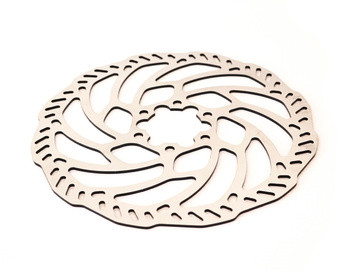
| Sur-Ron Light Bee / X | Front 220 mm, 2.3 mm · rear 220 mm, 2.3 mm | more diameter and more thickness in one part | yes |
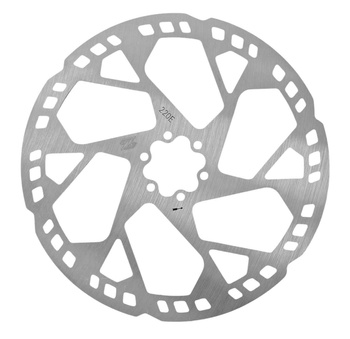
| Sur-Ron Light Bee, Talaria Sting, Segway X260 | Front 220 mm floating · rear 220 mm floating | best heat handling, bite point stays put | yes |
| Sur-Ron, Talaria, Segway (upgraded forks only) · 79Bike Falcon PRO and GT (stock forks) | Front 250 mm | maximum stopping power | yes |
| Sur-Ron Ultra Bee | WAVE MTX 240 × 101 × 3 mm | front and rear, 3 mm of material, high thermal resistance | no |
| Talaria Sting MX3 / MX4 | Rear 220 mm, 2.3 mm | stiffer and longer lasting than the 1.9 mm original | no |
| Talaria Sting PRO / MX5 | Original 220 mm | factory fitment, front or rear | no |
The caliper adapter — the number one reason parcels come back
The rule is simple: change the disc diameter and the caliper has to move away from the axle. Without an adapter the pads never line up with the braking ring and nothing bolts on.
- Every 220 mm disc on a Sur-Ron Light Bee / LBX — front or rear — needs the 220 mm caliper adapter. It is a small part, and without it the disc is useless.
- The 250 mm front disc needs the 250 mm caliper adapter.
- Stock-diameter discs — the 200 mm Sur-Ron rear, the WAVE MTX set for Ultra Bee, the Talaria rotors — bolt straight onto the factory caliper, no adapter needed.
Before you order the 250 mm
The 250 mm front is not an upgrade for everyone. On Sur-Ron, Talaria and Segway it only fits after a fork upgrade to Fastace or Rfloxa — there is no room for it on stock legs. The exception is the 79Bike Falcon PRO and GT, where 250 mm fits stock forks with no modification. Still riding stock Sur-Ron suspension? Then 220 mm is your answer.
The disc is half the system — pads are the other half
The biggest rotor in the world will not help if it runs worn or mismatched pads. Fit a fresh set whenever you change a disc: they bed in together, and only then does the full surface work from the first stop.
- Ceramic pads — Sur-Ron Light Bee, 79Bike Falcon PRO, E-Ride Pro SS 2.0. Less fade and longer life than OEM.
- Sur-Ron Ultra Bee pads — a set for the factory Ultra Bee system.
- Semi-metallic pads — Talaria Sting PRO / MX5.
When a disc is not enough: the Ultra Bee brake swap
If your Light Bee is already heavily built — more power, heavier wheels, flat-out trail riding — a bigger rotor alone may not keep up. That is where the full Ultra Bee brake transplant comes in: a stronger caliper and master cylinder, a different league of braking.
- Front brake conversion kit, Ultra Bee → Sur-Ron Light Bee X / L1e
- Rear brake conversion kit, Ultra Bee → Sur-Ron Light Bee X / L1e
Where to start
- Stock bike, soft lever on descents — start with a thicker disc in the stock size and fresh pads. No adapter, no complications.
- You want a real step up in power — 220 mm plus the adapter and pads. Best effect-per-euro in the whole brake range.
- Upgraded forks, or a Falcon — 250 mm up front, adapter and pads. It does not get stronger than this.
- Still cooking the system with a big disc — go for the Ultra Bee brake conversion.
Browse all brakes for Sur-Ron, Talaria, Ultra Bee and E-Ride Pro →
Not sure what fits your bike? Send us the model and year — we will put the right set together so nothing has to come back.
Recommended
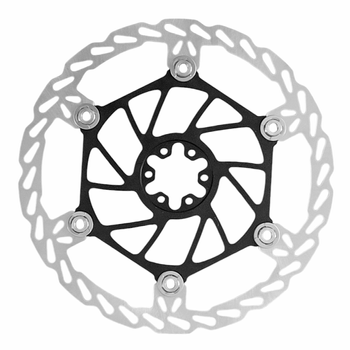
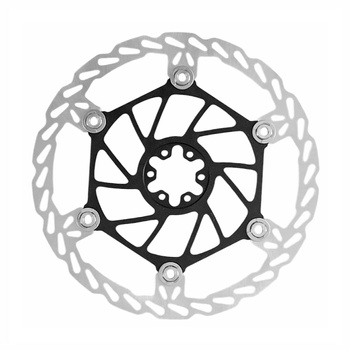
Big rear brake disc 220mm 96 Power Parts .Sur-Ron Light Bee/Talaria Sting/Segway X260