Sur-Ron Light Bee vs Ultra Bee – Which One Should You Buy in 2026? (And Where the Light Bee 2 Fits In)
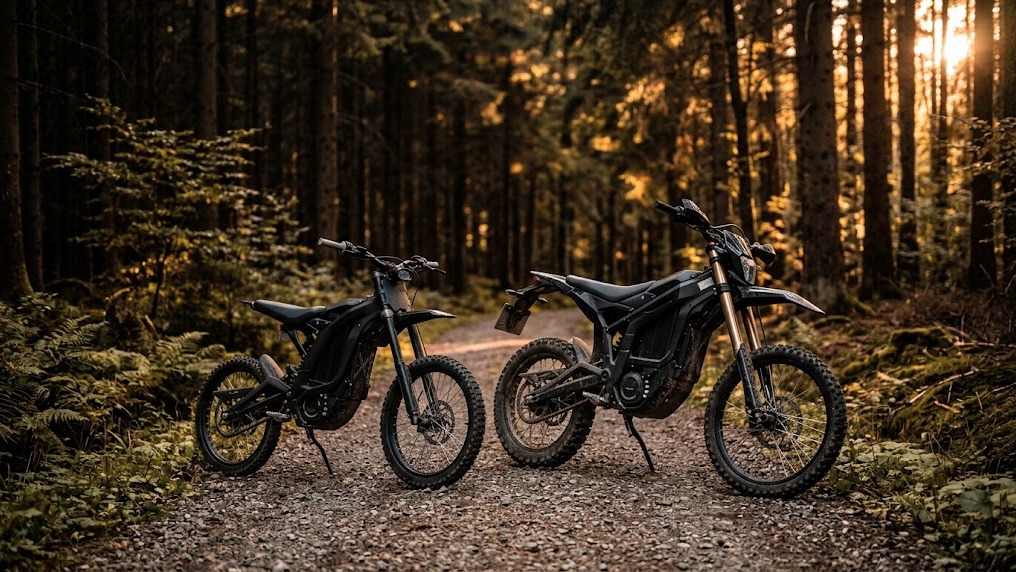
It is the question we hear most often on the phone: “Light Bee or Ultra Bee?”. The answer is not “bigger is better”. These are two different motorcycles for two different jobs – and picking the wrong one costs you either frustration on the trail or a few thousand paid for power you will never use.
We ride, service and tune both bikes every day, so what follows is a workshop comparison, not a brochure. The 2026 model year makes it more interesting, because the Light Bee 2 joins the line-up – a Light Bee with Ultra Bee power. We cover it too, without the hype.
The short answer
- Light Bee X / L1e – for most riders. Lightest, cheapest to buy and run, by far the biggest parts ecosystem. Perfect for woods, technical trails, supermoto and as a first electric bike.
- Ultra Bee – if you weigh over 90 kg, ride fast open trails, want to ride legally on the road at 90 km/h, or are moving over from a full-size MX bike.
- Light Bee 2 – if you want Ultra Bee power at Light Bee weight and can wait for delivery. A brand-new platform with no aftermarket yet.
Light Bee X vs Light Bee 2 vs Ultra Bee – specifications
All figures come from the current product cards in our shop (2026 model year).
| Spec | Light Bee X / L1e (2026) | Light Bee 2 X (2026) | Ultra Bee (2026) |
|---|---|---|---|
| Peak power | 10 kW | 24 kW | 24.5 kW (Turbo) |
| Wheel torque | 295 Nm | 410 Nm | 520 Nm |
| Battery | 72 V 35 Ah – 2.52 kWh | 78.5 V 45 Ah – 3.53 kWh (semi-solid-state) | 74 V 60 Ah – 4.44 kWh |
| Battery weight | – | 14.9 kg | 21.3 kg |
| Kerb weight | approx. 59 kg | approx. 65 kg | approx. 88.5 kg |
| Seat height | 831 mm | 830 mm | 910 mm |
| Wheelbase | 1255 mm | 1280 mm | 1380 mm |
| Suspension travel (front / rear) | 200 / 210 mm | 215 / 220 mm | 240 / 240 mm |
| Wheels | 19″ / 18″ | 19″ / 18″ | 19″ / 18″ |
| Top speed (off-road version) | approx. 80 km/h | 90 km/h | 95 km/h |
| Claimed range | up to approx. 75 km @ 40 km/h | up to approx. 107 km @ 40 km/h | up to 115 km @ 50 km/h |
| Charging 20–80 % | approx. 2.15 h | approx. 2 h | approx. 2.5 h |
| Wheelie / traction control | SWC / – | SWC / SRTC | SWC / ASR |
| Road homologation | L1e (45 km/h) | none – off-road only | L3e |
| Payload | 100 kg | 100 kg | 100 kg |
Range figures are manufacturer values measured at constant speed on flat ground. Off-road, battery capacity in kWh is what matters – compare that, not the brochure range.
Weight: 59 kg vs 88.5 kg – this is the real difference
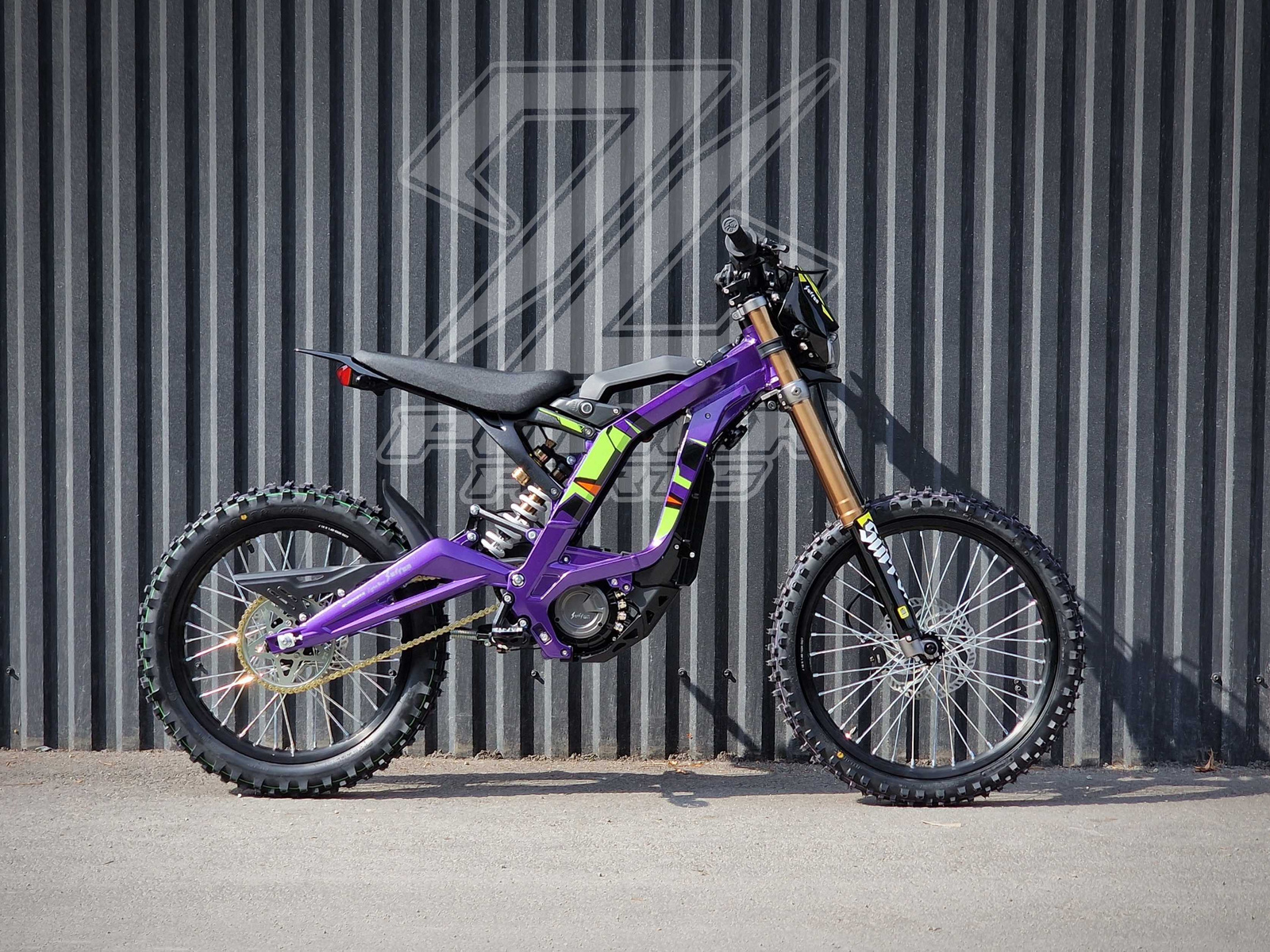
On paper, 30 kg looks harmless. On the trail it is a different world. You lift a Light Bee out of the mud with one hand, carry it over a fallen tree, load it onto a hitch rack alone. In the same situations the Ultra Bee behaves like a full-size MX bike – doable, but after the third crash in the mud you feel every kilogram.
The second thing is seat height: 830 mm vs 910 mm. Eight centimetres decide whether a 170 cm rider stands flat-footed or on tiptoes. If you are under 175 cm and have never ridden an MX bike, sit on an Ultra Bee before you order one.
On the other hand, the Ultra Bee’s mass works for you at speed: the longer wheelbase (1380 mm), 240 mm of travel and wider tyres give a stability that a 59 kg Light Bee simply does not have at 80 km/h over rocks. If your rides are fast gravel roads and open fields, that is an argument for the Ultra Bee.
Power and battery: 10 kW and 2.5 kWh vs 24.5 kW and 4.4 kWh
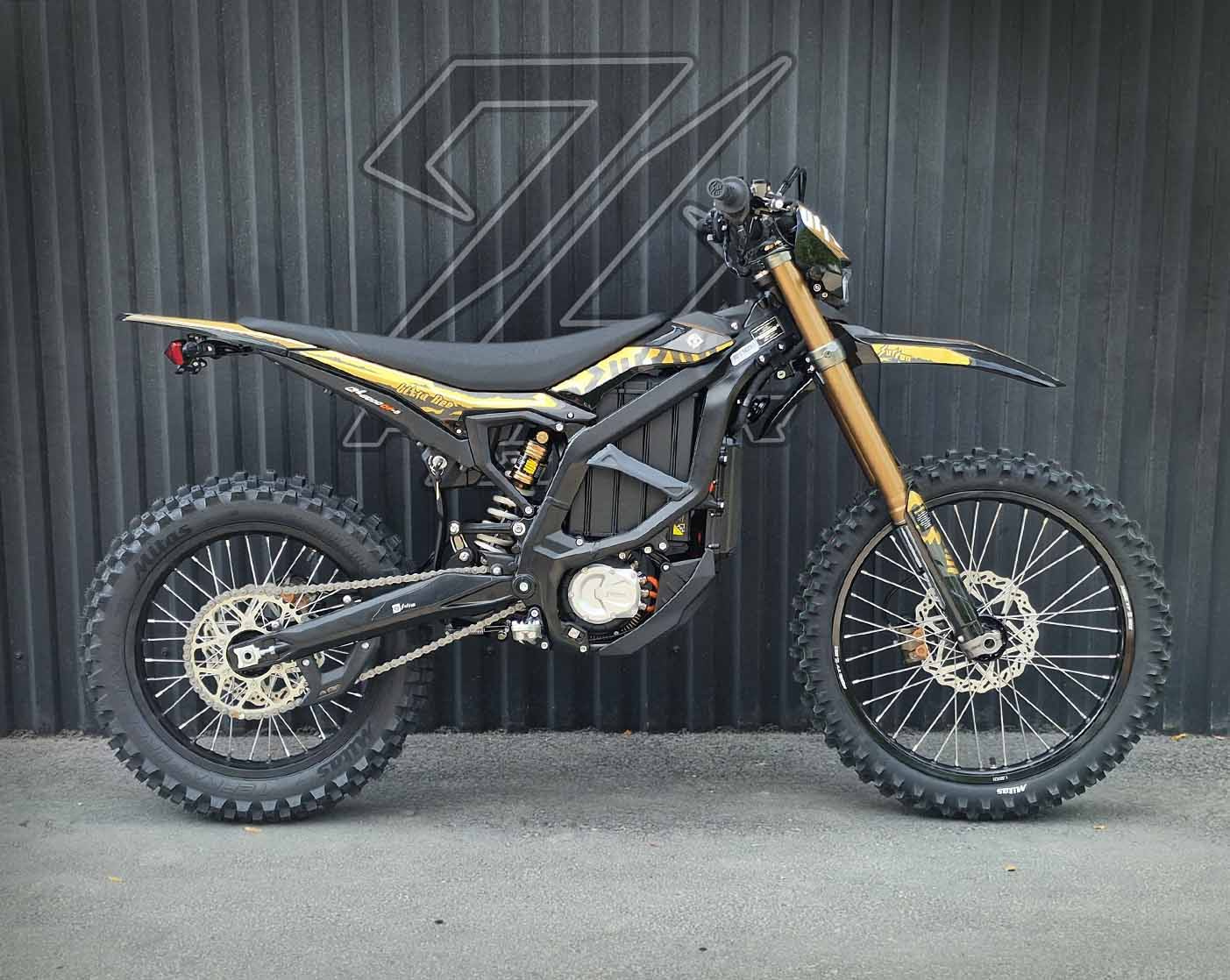
The Ultra Bee has two and a half times the power and a 76 % bigger battery. But ask yourself honestly: how much of that power will you use? In tight woods the 10 kW of a Light Bee X in Sport mode is plenty, and the lighter bike is faster through technical sections because it is easier to place. The Ultra Bee’s advantage only shows where you can hold the throttle open for more than a few seconds.
The battery is a different story. The Light Bee’s 2.52 kWh is realistically one long session of hard off-road riding. The Ultra Bee’s 4.44 kWh gives you a full day on the trail, or ride to the woods, ride, and ride home – without watching the percentage.
Keep in mind that the Light Bee X has huge tuning headroom: a TORP TC500 or TC1000 controller with a TM25/TM40 motor raises the power substantially while keeping the 60 kg weight. We covered it in detail in TC500 or TC1000, TM25 or TM40. The Ultra Bee can be pushed too – our Ultra Bee TORP TC1000 edition makes 27 kW.
Homologation and licence: L1e vs L3e
Light Bee L1e is moped homologation: the road version is limited to 45 km/h and can be ridden on an AM licence (from age 14–16 depending on the country) or any higher category. You register it, insure it and ride legally to the woods. The X version is pure off-road with no homologation – faster, but for private land and closed tracks only.
Ultra Bee L3e is motorcycle homologation: full road speed, indicators, mirrors, number plate. It requires an A1 licence or higher; in some EU countries a B (car) licence held for several years also qualifies, depending on the rated power and power-to-weight figures in the homologation of the specific bike – check before you buy. For an adult who wants one bike for the woods and for the road, the Ultra Bee is the only option of the three.
The Light Bee 2 X version has no road homologation. If you need a number plate, it is not your bike – for now.
Parts, service and running costs
This argument rarely shows up in comparisons, yet in practice it decides how happy you are with the bike a year later. The Light Bee is the best-supported electric platform in the world. In our shop you will find over 150 Light Bee parts – from pads and chains to reinforced swingarms, stems, footpegs, wheel sets and controllers. If something breaks or you want to change something, the part is available and the know-how is everywhere. Where to start is covered in Sur-Ron Light Bee Upgrade Path: Where to Start.
The Ultra Bee has a younger, smaller parts market, but it is growing – and we are part of it: our 96 Power Parts components for the Ultra Bee include a motor guard, footpegs, kickstand, tail tidy, sprockets and wheels. The most sensible upgrades are listed in Ultra Bee Build: Best Parts to Add in 2026.
Wheels: both bikes come on 19″/18″. For supermoto or full enduro we build our own 16/19 and 18/21 sets – see Supermoto vs Enduro Wheels – which setup fits. We also sell ready configurations with the bike: Light Bee 16/19 Edition and Ultra Bee 18/21 Edition.
Which one for whom – specifically
| Rider | Pick | Why |
|---|---|---|
| First electric bike, woods and trails | Light Bee X / L1e | Lightest, most forgiving, cheapest to repair. Grows with you through tuning. |
| Teenager with an AM licence / riding to the trail on the road | Light Bee L1e | The only one of the three with moped homologation. |
| Supermoto, stunt, urban | Light Bee X + 16/19 or 17/17 wheels | 59 kg is the foundation of wheelies and technique. Biggest choice of stunt parts. |
| Over 90 kg or taller than 185 cm | Ultra Bee | Payload is the same, but the suspension, frame and 910 mm seat are sized for an adult. |
| Fast gravel, open fields, all-day rides | Ultra Bee | 4.44 kWh, 240 mm travel and a long wheelbase – stability and range. |
| One bike for the woods and legally on tarmac at 90 km/h | Ultra Bee L3e | The only one with motorcycle homologation. |
| Coming from a 250–450 MX bike | Ultra Bee | Size, riding position and suspension closest to what you know. |
| Maximum power at minimum weight and you can wait | Light Bee 2 | 24 kW at 65 kg. New generation – but it is only just starting. |
Light Bee 2: wait for it or not?
The Light Bee 2 changes the balance: 24 kW and 410 Nm in a 65 kg bike, a 3.53 kWh semi-solid-state battery weighing 14.9 kg, a forged aluminium frame, traction and wheelie control, a TFT display. On paper it is an Ultra Bee at Light Bee weight – exactly what the market has been asking for.
But let’s be honest. It is a completely new platform: new EVO-2 motor, new controller, new battery, new frame. The spare-parts and tuning market for it is still to come, and the first batch goes to pre-order customers. Today the Light Bee 2 (2026+) category does not yet hold reinforcements or wheel sets – they will come, but not this season.
Our recommendation: if you want to ride now, choose the Light Bee X or the Ultra Bee – both are mature, proven designs with full parts support. If you can wait and power-to-weight is what you care about, reserve a Light Bee 2 – the first batch is limited.
Frequently asked questions
Is the Ultra Bee faster than the Light Bee?
Yes – 95 km/h vs approx. 80 km/h in the off-road versions, and above all it accelerates much harder (0–50 km/h in 1.84 s). In tight terrain top speed is irrelevant though; weight and agility matter, and there the Light Bee wins.
Does the Ultra Bee battery fit the Light Bee?
No. Different voltage (74 V vs 72 V), different shape, different connector. Batteries are not interchangeable between the models.
Can I ride the Ultra Bee on a car licence?
The Ultra Bee is L3e-homologated. Whether a car (B) licence qualifies depends on your country and on the rated power and power-to-weight values in the bike’s homologation. Ask us for the documents before you buy.
Which parts fit both bikes?
Handlebars and some cockpit accessories – yes. Footpegs, swingarms, motor guards, wheel sets and kickstands are model-specific. Every product in our shop has its fitment marked.
Light Bee X or Light Bee L1e?
Same motorcycle. X is the off-road version with no limiter and no homologation; L1e has moped homologation and a 45 km/h limiter on the road. If you do not need a number plate – X.
See both bikes in 96 Power Parts configuration
Every bike is assembled, configured and tested before hand-over. Packages with our parts, 16/19 or 18/21 wheels and TORP controllers are available directly at purchase. Warehouse and service in the EU.
Sur-Ron Light Bee X / L1e Sur-Ron Ultra Bee L3e Light Bee 2 – pre-orderStill not sure? Call +48 884 004 114 or write to contact@96powerparts.com. The full range is in the Vehicles category, and the comparison with Talaria, E-Ride Pro and 79Bike is in Sur-Ron vs Talaria vs E-Ride Pro vs 79Bike.